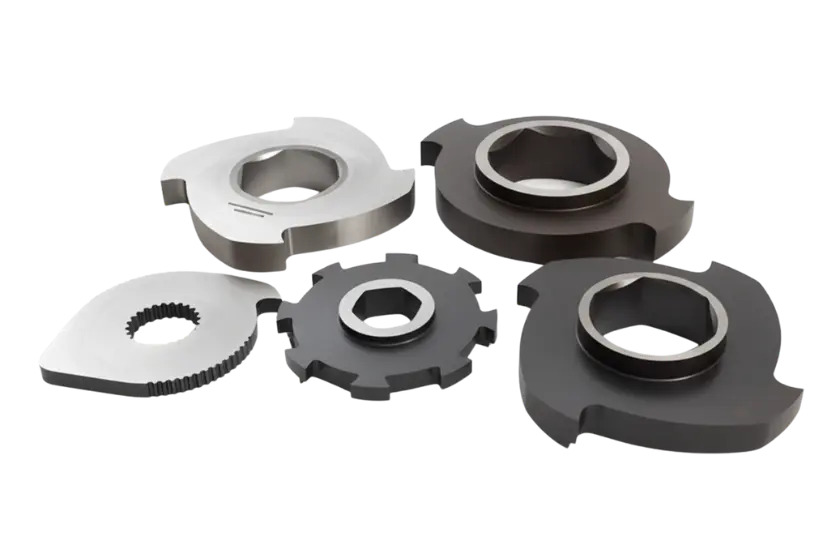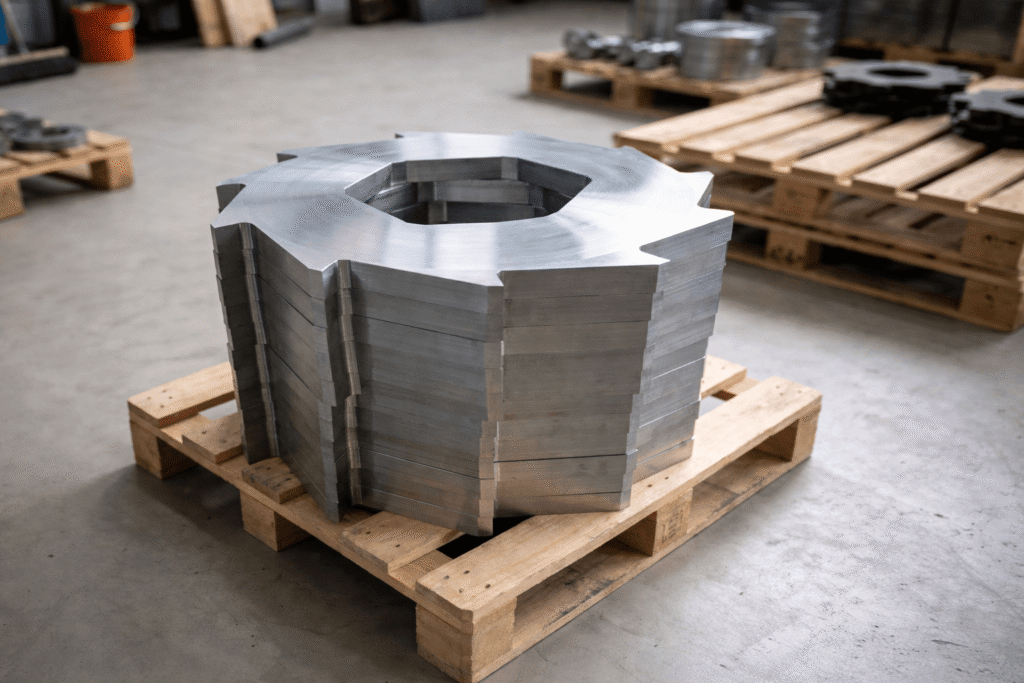
Industrial shredding technology plays a crucial role in modern recycling, waste management, and manufacturing processes. At the core of every high-performance shredder lies one essential component the shredder blade. The design, material composition, geometry, and configuration of shredder blades determine the cutting efficiency, durability, and operational reliability of shredding machines.
In this comprehensive guide, we explore the different types of shredder blades, their functions, materials, applications, and advantages. Understanding these variations enables industries to select the most suitable blades for their specific shredding needs, ensuring optimal productivity and longer machine lifespan.
What Are Shredder Blades?
Shredder blades are specialized cutting tools installed inside shredding machines to tear, cut, crush, or shear materials into smaller pieces. These blades rotate or move against each other to break down materials such as:
- Plastic waste
- Metal scrap
- Paper and cardboard
- Wood
- Rubber and tires
- Electronic waste
The effectiveness of a shredder depends largely on the quality, sharpness, and design of its blades. Each blade type is engineered for specific materials and shredding mechanisms, which is why selecting the right blade configuration is critical for industrial operations.
Major Types of Shredder Blade
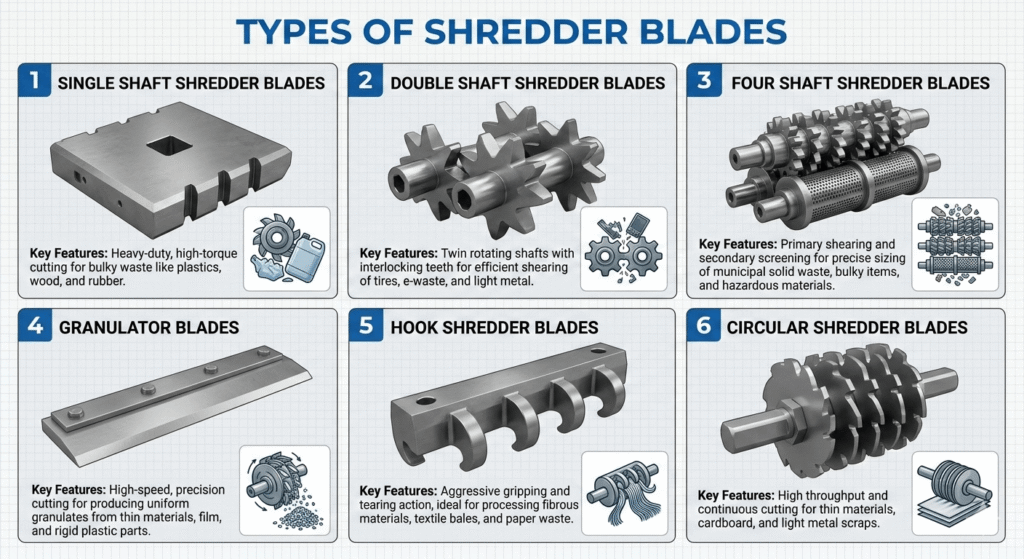
1. Single Shaft Shredder Blades
Single shaft shredder blades are commonly used in single-shaft shredders, which are widely utilized in plastic recycling, wood processing, and paper shredding.
Key Characteristics
- Mounted on a single rotating shaft
- Paired with counter knives or stator blades
- Designed for precise cutting and uniform particle size
Applications
These blades are ideal for shredding:
- Plastic containers
- Film and packaging materials
- Paper and cardboard
- Textile waste
- Wooden pallets
Advantages
- Controlled output size
- High cutting precision
- Low maintenance requirements
- Efficient processing of soft to medium-density materials
Single shaft shredder blades are often made from D2 tool steel or alloy steel, offering excellent wear resistance and extended service life.
2. Double Shaft Shredder Blades
Double shaft shredder blades are designed for dual-shaft shredders, where two shafts rotate toward each other. These machines are used for heavy-duty shredding tasks involving bulky or rigid materials.
Key Characteristics
- Installed on two counter-rotating shafts
- Interlocking blade configuration
- Produces high torque cutting force
Applications
Double shaft shredder blades are commonly used for:
- Metal scrap
- Plastic drums
- Electronic waste
- Rubber tires
- Industrial waste
Advantages
- High torque cutting capability
- Handles tough and bulky materials
- Reduced jamming risk
- Durable and long-lasting performance
These blades are typically manufactured from high carbon steel, chromium alloy steel, or heat-treated tool steel to withstand heavy loads.
3. Four Shaft Shredder Blades
Four shaft shredders represent an advanced shredding system that uses four synchronized shafts equipped with multiple cutting blades.
Key Characteristics
- Four rotating shafts
- Integrated screen system for size control
- Provides multi-stage shredding
Applications
Four shaft shredder blades are suitable for:
- Hazardous waste
- Medical waste
- Electronic components
- Industrial packaging
- Confidential documents
Advantages
- High shredding precision
- Uniform output size
- Efficient processing of mixed materials
- Improved material control
Because these blades operate under intense stress, they are often produced using hardened alloy steel with advanced heat treatment processes.
4. Granulator Blades
Granulator blades are used in plastic granulators, which are machines designed to reduce plastic waste into small, reusable granules.
Key Characteristics
- Consist of rotor blades and stationary bed knives
- Operate at high speeds
- Produce fine particle sizes
Applications
Granulator blades are widely used in:
- Plastic recycling plants
- Injection molding factories
- Packaging industries
- Polymer processing facilities
Advantages
- High precision cutting
- Smooth and uniform granules
- Excellent efficiency for thermoplastics
These blades are generally manufactured from SKD-11, D2 steel, or tungsten carbide-coated materials to maintain sharpness and resist wear.
5. Hook Shredder Blades
Hook shredder blades feature curved or hooked cutting edges, specifically designed to grab and tear materials apart during shredding.
Key Characteristics
- Distinctive hook-shaped teeth
- Aggressive tearing action
- High grip on materials
Applications
Hook shredder blades are highly effective for shredding:
- Plastic pipes
- Industrial containers
- Thick rubber
- Wooden furniture
- Textile bundles
Advantages
- Strong gripping capability
- Efficient tearing performance
- Reduced slippage during shredding
These blades are typically hardened through precision heat treatment processes to increase strength and durability.
6. Circular Shredder Blades
Circular shredder blades, also known as rotary cutting blades, are disc-shaped blades commonly used in rotary shredders and cutting machines.
Key Characteristics
- Round blade structure
- Sharp cutting edges
- Mounted on rotating shafts
Applications
Circular shredder blades are used in industries processing:
- Paper and cardboard
- Plastic sheets
- Films and foils
- Packaging materials
Advantages
- High cutting accuracy
- Smooth slicing performance
- Suitable for continuous operations
These blades are usually produced from high-speed steel or carbide materials, providing superior cutting capability and longevity.
Materials Used in Shredder Blade Manufacturing
The performance and durability of shredder blades depend heavily on the materials used during manufacturing. High-quality materials ensure resistance to wear, impact, and corrosion.
- D2 Tool Steel: D2 steel is widely used for shredder blades due to its high hardness and wear resistance. It is ideal for shredding plastics, rubber, and soft metals.
- SKD-11 Steel: SKD-11 is a premium grade tool steel offering excellent toughness and long service life, commonly used in granulator and precision cutting blades.
- High Carbon Steel: High carbon steel provides strong cutting edges and improved durability, making it suitable for heavy-duty shredding applications.
- Tungsten Carbide: Tungsten carbide blades are extremely hard and abrasion resistant, often used in high-speed industrial shredding operations.
Factors to Consider When Choosing Shredder Blades
Selecting the right shredder blade requires careful evaluation of several critical factors.
- Material Type: Different materials require specific blade hardness and geometry to achieve efficient shredding.
- Blade Hardness: Harder blades last longer but must maintain adequate toughness to prevent cracking.
- Cutting Edge Design: Blade designs such as hooked, straight, or serrated edges determine the shredding performance.
- Machine Compatibility: Blades must match the shredder machine specifications, shaft diameter, and mounting configuration.
- Maintenance Requirements: High-quality blades should allow easy sharpening and replacement, reducing operational downtime.
Maintenance Tips for Shredder Blades
Proper maintenance significantly extends the lifespan and performance of shredder blades.
Regular inspection helps identify wear or damage early. Routine sharpening restores cutting efficiency and prevents excessive machine strain. Keeping blades clean and properly lubricated reduces friction and overheating. Additionally, operators should avoid overloading shredders with unsuitable materials, which can cause premature blade damage.
Scheduled maintenance ensures consistent shredding performance, reduced operational costs, and improved machine longevity.
Conclusion
Shredder blades are the foundation of efficient shredding technology. From single shaft and double shaft blades to granulator and circular cutting blades, each type is engineered for specific industrial applications. Understanding the different types of shredder blades, their materials, and operational advantages allows businesses to select the most suitable blades for their processing needs.
By investing in high-quality shredder blades and implementing proper maintenance practices, industries can achieve maximum productivity, reduced downtime, and superior shredding performance.