
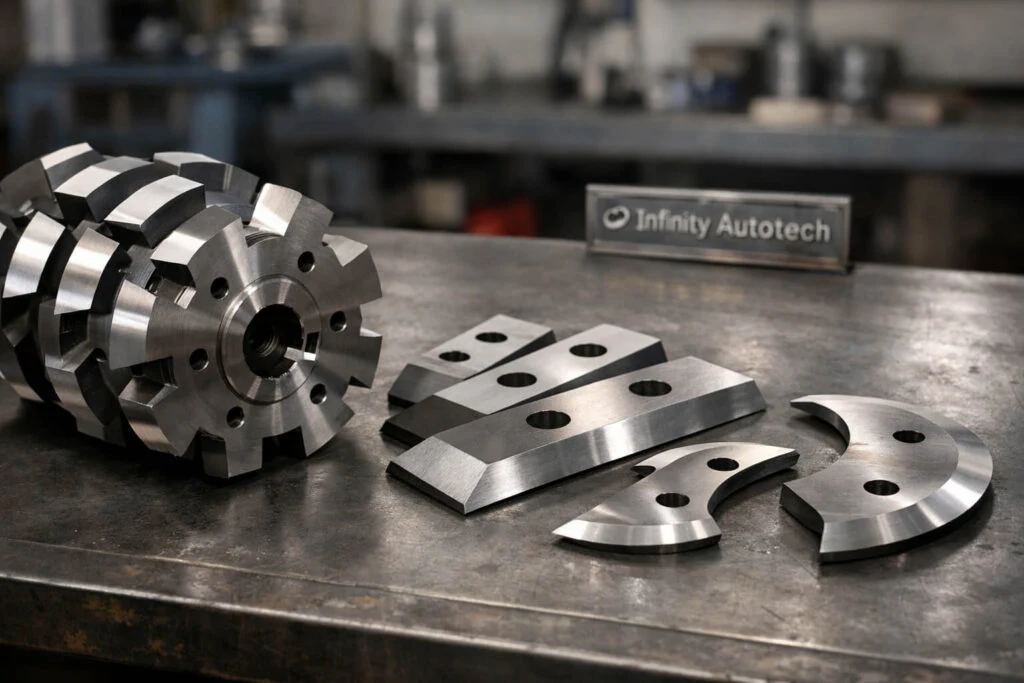
When it comes to industrial shredder machines, the material used for the blades is a key factor that directly impacts performance, durability, and efficiency. Shredder blades operate under extreme conditions, facing constant stress, friction, and high temperatures. Because of this, choosing the right material is essential to ensure reliable operation and long service life.
In this article, we’ll take a closer look at the most commonly used materials for shredder blades, their properties, and the important factors to consider when selecting the ideal option for your specific shredding applications.
Understanding Shredder Blade Requirements
Before selecting the best material, it’s important to understand the essential characteristics that a high-quality shredder blade must have:
- High Wear Resistance: Blades are exposed to continuous friction while processing tough materials, so they must resist wear and abrasion effectively.
- Strong Toughness: The material should be able to handle heavy impact loads without cracking or chipping.
- Corrosion Resistance: Since shredders often process moist or chemically treated materials, resistance to rust and corrosion is crucial.
- Sharpness and Edge Retention: Efficient shredding depends on sharp blades, and the material must maintain its cutting edge over extended use.
With these key requirements in mind, we can now explore the most widely used materials in shredder blade manufacturing.
Different Materials for Shredder Blades
1. High-Speed Steel (HSS)
High-Speed Steel (HSS) is widely used in the manufacturing of shredder blades due to its excellent combination of hardness, toughness, and wear resistance. It is specifically designed to perform well under high temperatures, making it an ideal choice for demanding and heavy-duty shredding operations.
Advantages:
- High hardness, which enables sharper and more precise cutting edges
- Excellent wear resistance, even during high-speed operations
- Reliable performance when processing tough materials such as metals and hard plastics
Disadvantages:
- More expensive compared to other blade materials
- Requires proper handling and maintenance to avoid chipping
Best Suited For: Shredding hard, abrasive materials such as metals and rigid plastics
2. Tungsten Carbide
Tungsten carbide is one of the hardest materials used in shredder blade manufacturing, making it a preferred choice for industries handling extremely tough and abrasive materials, such as scrap metal recycling. Blades made from tungsten carbide are known for their exceptional wear resistance and their ability to retain sharpness for a significantly longer time compared to other materials.
Advantages:
- Extremely hard and highly durable
- Outstanding wear resistance, even in highly abrasive environments
- Long service life due to superior edge retention
Disadvantages:
- Brittle in nature, making it susceptible to cracking or chipping under heavy impact
- Higher cost compared to most other blade materials
Best Suited For: Heavy-duty shredding applications involving materials such as metal, concrete, and other highly abrasive substances.
3. D2 Tool Steel
D2 tool steel is a widely used material for shredder blades, valued for its high carbon content and balanced performance. It offers a strong combination of hardness, wear resistance, and toughness, making it suitable for applications where precision cutting is important, but extreme hardness is not required.
Advantages:
- Good wear resistance combined with solid toughness
- Excellent edge retention for consistent cutting performance
- Easier to sharpen compared to harder materials like tungsten carbide
Disadvantages:
- Not as hard as tungsten carbide, limiting its use with extremely tough materials
- Can be prone to rust if not properly maintained
Best Suited For: General-purpose shredding tasks involving materials such as plastics, rubber, and light metals.
4. Stainless Steel
Stainless steel is commonly used for shredder blades, especially in applications where corrosion resistance is essential. Grades such as 304 and 420 stainless steel provide a balanced combination of durability, corrosion resistance, and moderate hardness.
Advantages:
- Excellent resistance to corrosion, making it ideal for processing wet or chemically treated materials
- More cost-effective compared to materials like high-speed steel or tungsten carbide
- Can be heat-treated to improve hardness and wear resistance
Disadvantages:
- Less durable in high-impact or heavy-duty applications compared to tool steels or carbide
- May require more frequent sharpening to maintain performance
Best Suited For: Shredding applications involving organic waste, paper, and other materials where corrosion resistance is a key requirement.
5. Chromium Steel
Chromium steel, often alloyed with elements such as molybdenum or vanadium, is a high-strength material known for its excellent hardness and wear resistance. It is widely used in recycling and industrial applications where shredder blades must handle a variety of tough and mixed materials.
Advantages:
- Stronger and more durable than standard carbon steel
- Good resistance to both wear and impact
- Can be hardened to improve edge retention and maintain sharpness
Disadvantages:
- Susceptible to corrosion if not properly maintained
- May not offer the same level of toughness as high-carbon steels or tungsten carbide
Best Suited For: Shredding applications involving mixed materials such as plastics, wood, and light metals.
6. Alloy Steel
Alloy steels, including nickel-chromium and chromium-molybdenum grades, are widely used for shredder blades due to their excellent balance of strength, hardness, and toughness. These materials are particularly suitable for applications where impact resistance is more important than extreme wear resistance.
Advantages:
- Strong and tough, making them resistant to impact and deformation
- Can be heat-treated to improve wear resistance and overall performance
- More cost-effective compared to high-performance materials
Disadvantages:
- Lower wear resistance compared to materials like tungsten carbide or high-speed steel
- May require more frequent sharpening in high-wear environments
Best Suited For: Shredding softer materials such as paper, textiles, and rubber.
Factors to Consider When Choosing the Best Material
Selecting the right material for shredder blades requires careful evaluation of several key factors:
- Type of Material to Be Shredded: The nature of the material whether metal, plastic, or organic plays a crucial role. Harder and more abrasive materials demand blades with higher wear resistance and strength.
- Shredding Volume: High-volume operations require blade materials that can endure continuous use with minimal wear and downtime.
- Cost vs. Durability: Premium materials such as tungsten carbide and high-speed steel offer superior performance but come at a higher cost. It’s important to assess whether the added durability justifies the investment for your specific application.
- Maintenance Requirements: Different materials require varying levels of maintenance. For example, some may need frequent sharpening or protection against corrosion, so consider your maintenance capabilities and costs.
Conclusion
Materials like high-speed steel and tungsten carbide are ideal for heavy-duty applications due to their exceptional hardness and wear resistance. On the other hand, options such as stainless steel and alloy steel provide more cost-effective solutions for lighter-duty or less abrasive shredding tasks.
Ultimately, the best choice depends on your specific requirements, including the type of material being processed, expected blade lifespan, and overall cost efficiency within your operation.
For a blade enquiry, contact our team at sales@infinityautotech.com with your drawing, machine details, material and quantity.