
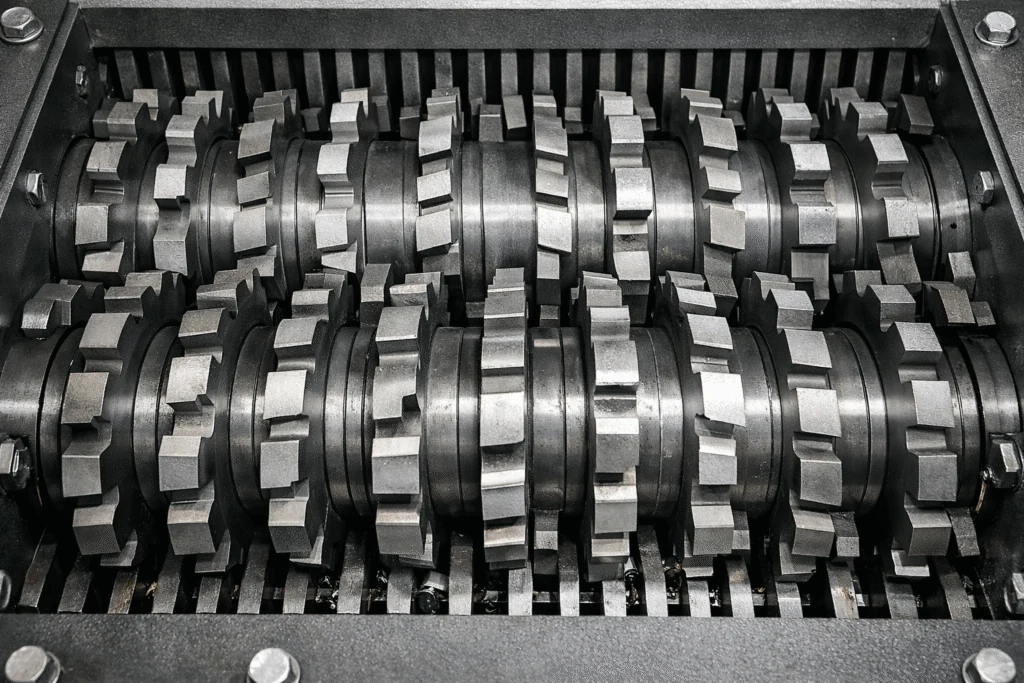
Double shaft shredders play a vital role in industries like recycling, waste management, manufacturing, and plastic processing. Selecting the right blades for these machines is crucial to ensure efficient performance. Using unsuitable blades can lead to poor results, frequent breakdowns, and higher operational costs. By choosing blades that match your specific material and application, you can improve efficiency, extend blade life, and safeguard your equipment. In this article, we share five expert tips to help you choose the most appropriate blades for your shredding needs.
5 Tips for Choosing Double Shaft Shredder Blades
1. Choose Blades Based on Your Application
Understand the Materials You Will Process
The first and most important step is to clearly identify the materials your shredder will handle. Each type of material requires specific blade properties to ensure efficient cutting and long-lasting performance. For example:
| Material Type | Suitable Blade Features |
| Soft Plastics | Moderate toughness, lightweight construction |
| Metals | Extremely strong and highly durable blades |
| Rubber/Textiles | Flexible yet sharp cutting edges |
Tip: Create a detailed list of all materials you plan to process. This helps you choose the most suitable blades without missing any critical requirements.
Evaluate Material Hardness and Density
The hardness and density of the material play a key role in blade selection. Tougher and denser materials require blades made from high-strength, wear-resistant materials. For instance, shredding metals or heavy debris demands hardened steel blades, while softer materials like fabrics or rubber can be processed with less heavy-duty options.
2. Make Sure the Blades Are Compatible with Your Shredder
Verify Blade Size and Configuration
Shredder blades are not one-size-fits-all. It is essential to ensure that the blade dimensions, mounting style, and spacing align perfectly with your machine’s specifications. Using incompatible blades can result in reduced efficiency, equipment damage, or even complete system failure.
Note: Always check with your shredder manufacturer or supplier to confirm the correct blade types and configurations for your equipment.
3. Assess Blade Material and Manufacturing Quality
Select High-Quality Materials
The material used in shredder blades plays a crucial role in their performance and lifespan. Common options include:
- Alloy Steel – Durable and flexible, ideal for general-purpose applications
- Hardened Steel – Offers excellent wear resistance, suitable for tough or abrasive materials
- Carbide-Tipped or Coated Blades – Designed for heavy-duty use and extended service life
Tip: Always check the material specifications before purchasing. High-quality materials help extend blade life and reduce the frequency of replacements.
Consider Surface Treatments and Coatings
Modern coatings such as carbide or titanium nitride enhance resistance to wear, heat, and corrosion. Additionally, heat-treated blades retain their sharpness and hardness for a longer period. While these options may have a higher initial cost, they can significantly lower maintenance requirements over time.
Choose a Reliable Manufacturer
The credibility of the supplier is equally important. Work with manufacturers that have a strong reputation, positive customer feedback, and proper certifications. It’s also beneficial to choose suppliers that offer warranties or after-sales support to ensure consistent performance and long-term reliability.
4. Choose the Appropriate Blade Design for Your Application
Understand Different Hook Types
The number and shape of blade hooks play a significant role in shredding performance:
- Single-Hook Blades – Best suited for light materials such as plastic films
- Double-Hook Blades – Ideal for medium-duty tasks like wood or rubber
- Multi-Hook Blades – Designed for heavy-duty applications, including metals and mixed industrial waste
Consider Blade Thickness and Tooth Design
- Thicker Blades provide greater strength but may be less efficient when processing softer materials
- Pointed Teeth work well for cutting hard materials
- Rounded Teeth are more effective for soft or fibrous materials
Ensure Proper Blade Spacing and Alignment
Correct blade spacing and alignment are essential for smooth and efficient operation. Poor alignment or incorrect spacing can cause material jams and uneven blade wear.
Tip: Regularly check and adjust blade alignment according to the manufacturer’s recommendations to maintain optimal performance.
5. Balance Cost, Performance, and Maintenance
Focus on Long-Term Value
Avoid choosing blades based solely on low upfront cost. Cheaper blades often wear out faster, leading to frequent replacements and increased downtime. Investing in high-quality blades can deliver better long-term value by improving efficiency and reducing replacement frequency.
Consider Ease of Maintenance and Replacement
Select blades that are simple to clean, sharpen, and replace. Modular blade systems are especially practical, as they allow you to change only the worn sections instead of replacing the entire blade, saving both time and money.
| Blade Type | Advantages |
| Fixed Blades | Consistent performance, but more difficult to replace |
| Modular Blades | Easy and quick replacement, suitable for diverse applications |
Note: Always check if spare parts are easily available and reasonably priced. Reliable support and accessible components help minimize downtime.
Final Thoughts
Selecting the right double shaft shredder blades goes beyond basic cutting ability—it’s about maximizing efficiency, durability, and overall value. Choose a blade design that matches your application, balance cost with performance, and consider maintenance requirements. These factors will help your shredder operate more efficiently and extend its service life.
For best results, consult a shredder blade expert or manufacturer to find the most suitable option for your specific needs.