In the world of recycling, the shredder is often the unsung hero of the entire operation. It’s the machine that takes bulky, awkward waste and turns it into something manageable for the rest of the line. But walk into any equipment supplier’s showroom or scroll through industrial forums, and you’ll quickly realize there’s a big debate: single-shaft or double-shaft? Both have their loyal fans, and picking the wrong one can lead to bottlenecks, higher costs, or material that just doesn’t process well downstream.
I’ve spoken with plant managers who’ve swapped machines mid-project because the throughput wasn’t what they expected, and others who swear by running both in sequence. There’s no universal “best” answer it really depends on what you’re feeding into the hopper and what you need coming out the other side. Let’s break it down in practical terms so you can figure out what fits your recycling line.
How They Actually Work
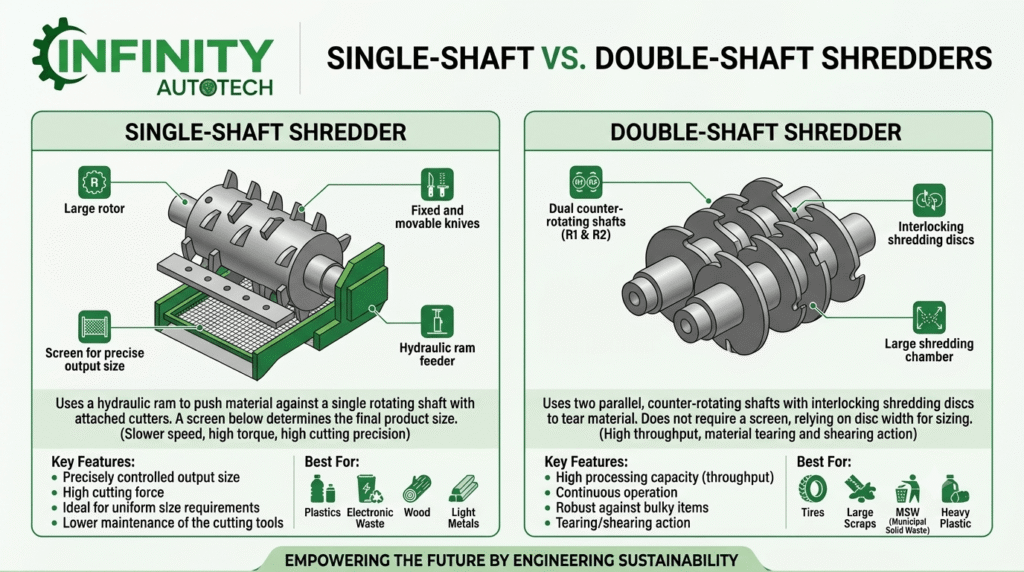
Single-shaft shredders have one main rotor with cutting blades that spin against fixed counter-knives. A hydraulic pusher ram keeps feeding material into the rotor, and there’s usually a screen at the bottom that controls the output size. Material stays in the chamber until it’s small enough to fall through. This setup gives you more control over particle uniformity.
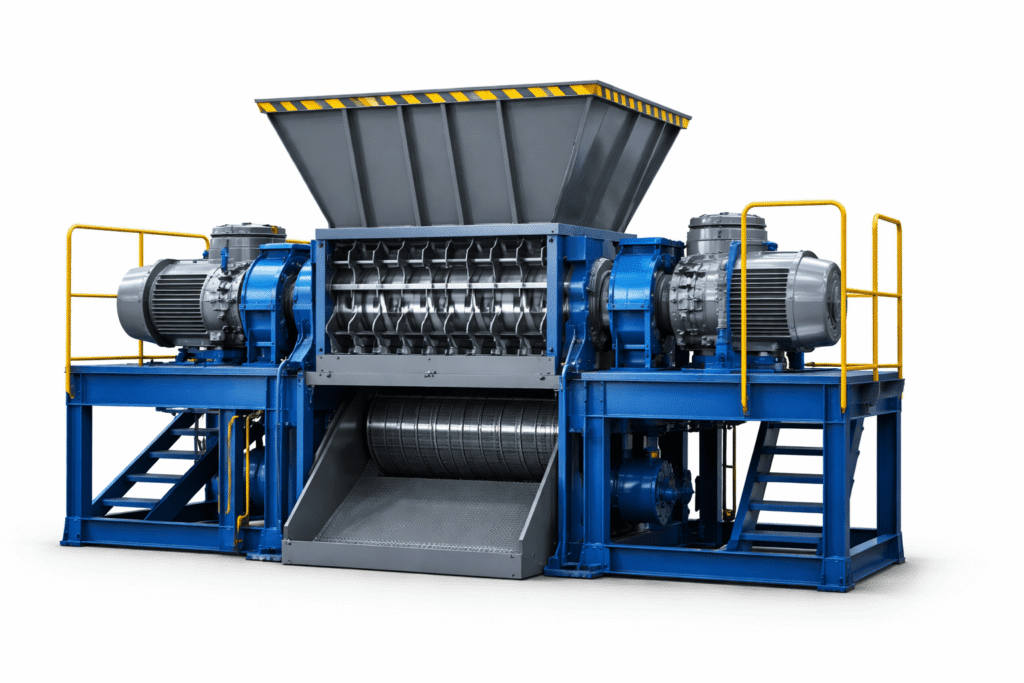
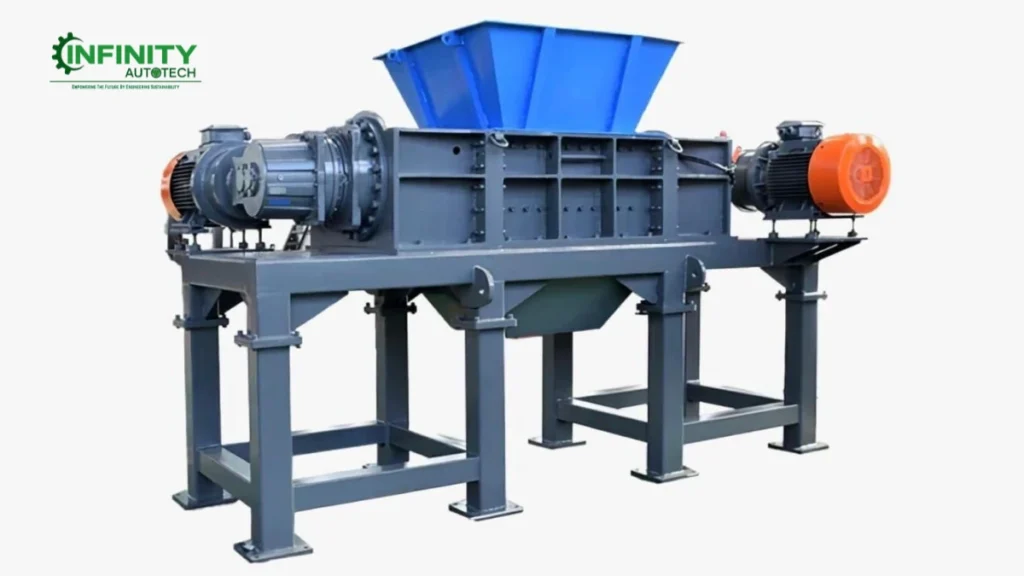
Double-shaft (or twin-shaft) shredders, on the other hand, use two counter-rotating shafts with interlocking blades. They grab, tear, and shear material with high torque. No screen in the basic designs means the output drops out once it’s broken down enough. It’s a more aggressive, grabbing action that’s great for pulling in bulky or awkward pieces without much help.
The mechanical difference sounds simple, but it changes everything about how the machine behaves in real life.
Strengths and Weaknesses in Real Operations
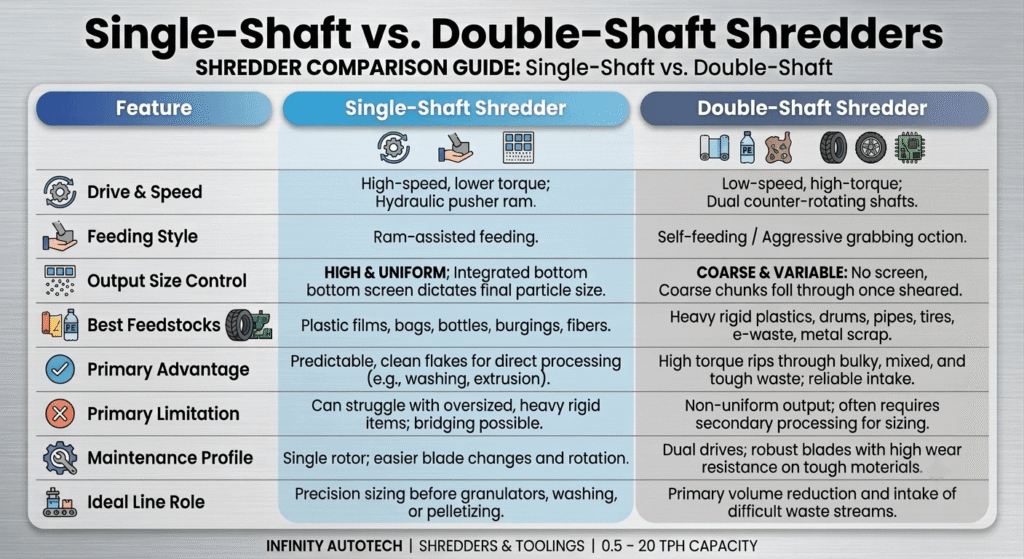
Single-shaft shredders shine when you need consistent, controlled output. Because of the screen, you can dial in sizes that work nicely for washing lines, granulators, or pelletizers. They’re often better for plastics like films, bottles, fibers, and lighter rigid materials. Operators like them for cleaner runs with less variation in chip size, which helps downstream equipment run smoother and reduces wear.
On the flip side, they can struggle with really bulky or heavy items. The pusher ram helps, but jamming or bridging can happen if the feed isn’t managed well. They also tend to run at higher speeds but might need more passes for very tough stuff. Maintenance is generally simpler and cheaper since there’s one rotor to worry about.
Double-shaft shredders are the heavy lifters. Their high-torque, low-speed design rips through pipes, drums, tires, mixed waste, e-waste, and large hollow items that would bog down a single shaft. The dual action pulls material in aggressively, which means less pre-sorting and better handling of contaminated or irregular streams. Many plants use them as primary reducers for MSW or industrial bulky waste.
The trade-off? Output size is less uniform, and without a screen, you might get bigger chunks that need secondary processing. They can consume more power and have higher maintenance on the dual drive systems and blades, though blade wear can actually be lower on tough materials because of the shearing action.
Energy use often runs higher on doubles for the same volume, but their ability to handle difficult material without frequent stops can make overall efficiency better in the right setting.
Real-World Applications: Matching Machine to Material
If your line mostly handles plastic film, stretch wrap, PE/PP bags, or lighter post-consumer bottles, a single-shaft is usually the smarter pick. It delivers the uniform flakes that washing and extrusion lines love. Many film recycling operations rely on them heavily because the output integrates seamlessly with downstream steps.
For rigid plastics like thick pipes, HDPE drums, purgings, or mixed streams with wood, metal bits, or bulky items, double-shaft machines often win. Tire recyclers, construction waste processors, and e-waste facilities frequently start with twins because they can eat big irregular pieces without much drama.
A lot of smart operations run a hybrid setup: double-shaft for initial rough shredding, then single-shaft for sizing. This two-stage approach gives you the best of both high volume intake plus controlled output. It’s more expensive upfront but can pay off quickly in throughput and reduced downtime.
Factors Beyond Just the Material
Budget matters, obviously. Single-shaft units are often more affordable to buy and run day-to-day, with easier blade changes and lower power draws for lighter duties. Double-shafts cost more initially and might need stronger electrical infrastructure, but they can process higher volumes of challenging waste with less operator intervention.
Space and maintenance access are practical concerns too. Single-shaft machines can be more compact in some designs, while doubles need room for the dual drive. Think about your team’s expertise simpler single-shaft setups might suit smaller crews better.
Output requirements are crucial. If your buyers or next process demands tight size specs (say, for RDF production or high-quality pelletizing), the screen on a single-shaft gives you that precision. For volume reduction before sorting or landfilling, the rougher output from a double might be perfectly fine.
Don’t forget throughput goals. A well-fed double-shaft can fly through tons per hour of mixed waste, while a single-shaft might deliver steadier but sometimes slower consistent processing.
Making the Decision for Your Line
Start by auditing your incoming material. What’s the biggest, toughest piece you expect regularly? What percentage is film versus rigid? How contaminated is the stream? Measure your current bottlenecks if you are constantly stopping to clear jams or if downstream equipment is unhappy with variable sizes, that points strongly one way or the other.
Talk to other operators in similar businesses. Visit plants if you can. Many suppliers will run trials with your actual waste, which is worth its weight in gold. Don’t rely solely on brochures; real-world behavior with your specific mix is what counts.
Consider future growth too. If you are expanding into new waste streams, a more versatile double-shaft might give you flexibility, or plan for a two-stage system from the start.
Single-Shaft vs. Double-Shaft Shredders Comparison
The Bottom Line
There’s no shame in either choice both are proven workhorses when applied correctly. Single-shaft shredders tend to be the precision tools for controlled recycling loops, especially plastics. Double-shafts are the brute force option for conquering difficult, bulky, or mixed waste. Many successful lines use both in tandem.
The “right” one is the one that matches your material profile, throughput needs, and downstream requirements without creating new headaches. Take time to evaluate honestly, maybe run some numbers on operating costs over a full year, and you will avoid that expensive regret later.
In recycling, the shredder sets the tone for everything else. Get this decision right, and the rest of your line has a much better chance of humming along profitably.