
Introduction
In the modern recycling and waste management industry, industrial shredders play a critical role in reducing material size, improving handling efficiency, and preparing waste for recycling or disposal. At the heart of every shredder lies one of its most important components: the shredder blade.
Shredder blades are the cutting tools responsible for breaking down plastics, metals, tires, electronic waste, wood, paper, and other industrial materials into smaller, manageable pieces. Their design, material composition, and cutting geometry directly impact shredding efficiency, machine performance, energy consumption, and operating costs.
Whether you’re operating a recycling facility, manufacturing plant, waste processing center, or scrap yard, understanding shredder blades is essential for maximizing productivity and minimizing downtime.
In this comprehensive guide, we’ll explore what shredder blades are, how they work, the different types available, material selection, maintenance requirements, and how to choose the right blade for your application.
For premium industrial-grade solutions, explore our range of Shredder Blades.
What Are Shredder Blades?
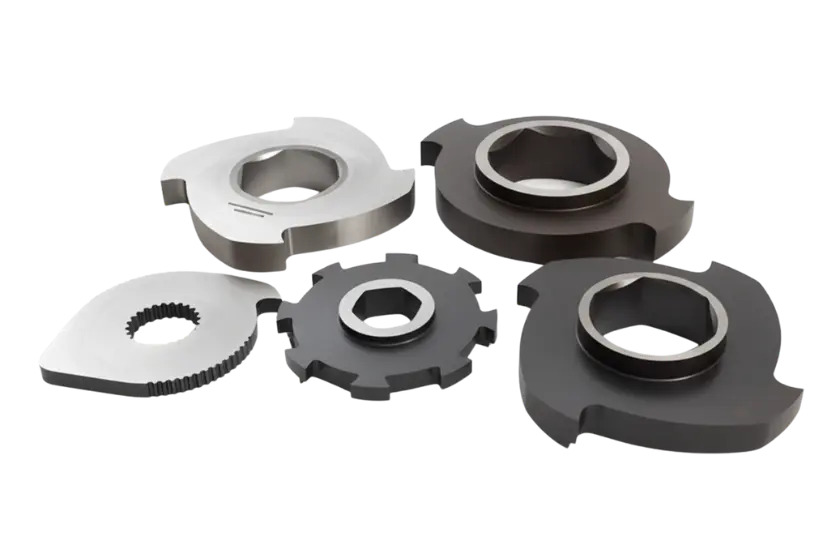
Shredder blades are specialized cutting components installed inside industrial shredding machines. Their primary function is to cut, tear, shear, crush, or reduce materials into smaller particles.
Unlike ordinary cutting tools, shredder blades must withstand:
- High impact forces
- Continuous friction
- Abrasive materials
- Heavy operating loads
- Extreme wear conditions
Industrial shredders often process thousands of kilograms of material every day, making blade quality one of the most important factors affecting machine reliability and throughput.
How Do Shredder Blades Work?
The operation of shredder blades depends on the machine design and application.
Typically, blades are mounted on rotating shafts that work together with fixed counter-knives or opposing blade sets. As material enters the cutting chamber, the blades:
- Grab the material.
- Pull it toward the cutting zone.
- Apply shearing force.
- Break the material into smaller pieces.
- Discharge the shredded output.
The blade shape, hook design, thickness, spacing, and hardness determine how effectively the material is processed.
Why Are Shredder Blades Important?
Many operators focus on motors, gearboxes, and machine capacity while overlooking the importance of blades.
However, the right shredder blade can:
- Increase throughput
- Improve particle consistency
- Reduce energy consumption
- Minimize machine jams
- Lower maintenance costs
- Extend machine life
- Improve recycling efficiency
Poor-quality or worn blades often result in:
- Excessive power consumption
- Material wrapping
- Inconsistent output size
- Frequent downtime
- Increased operational expenses
Main Components of a Shredder Blade System
A complete shredding system consists of multiple cutting components:
1. Rotating Blades: Mounted on rotating shafts and responsible for active cutting.
Functions:
- Pull material inward
- Perform primary shredding
- Generate cutting force
2. Fixed Knives: Stationary blades positioned opposite the rotating cutters.
Functions:
- Create shearing action
- Improve cutting precision
- Control output size
3. Spacers: Installed between blades to maintain proper blade alignment and cutting clearance.
Benefits:
- Consistent cutting performance
- Reduced friction
- Better material flow
4. Shaft Assemblies: Support blade installation and transmit torque from the drive system.
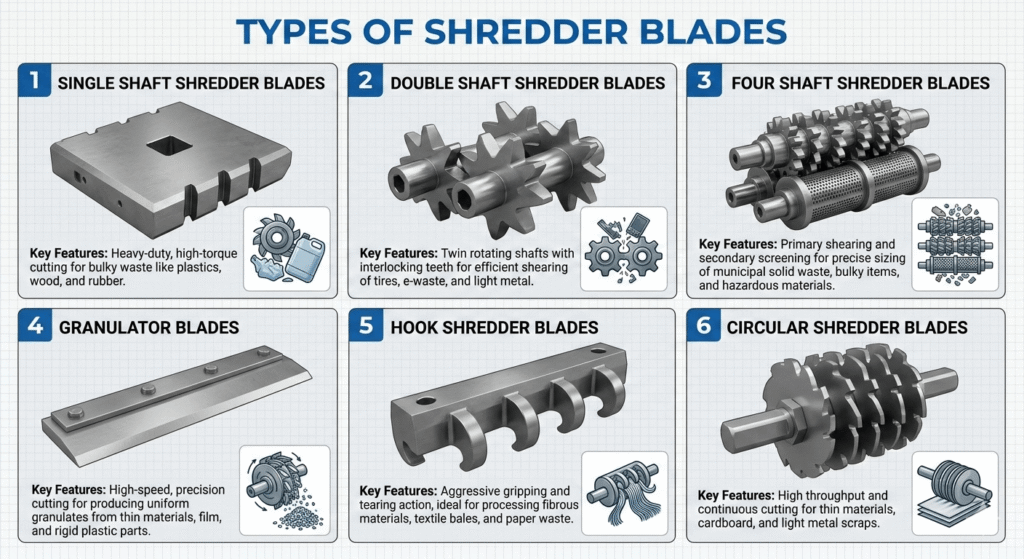
Types of Industrial Shredder Blades
Different shredding applications require different blade designs.
1. Single-Shaft Shredder Blades: Single-shaft shredders use a rotor equipped with multiple cutters working against fixed knives.
Common Applications
- Plastic waste
- Wood waste
- Paper
- Cardboard
- Textile waste
Advantages
- Uniform particle size
- High efficiency
- Lower maintenance requirements
2. Double-Shaft Shredder Blades: Double-shaft shredders feature interlocking blades mounted on two rotating shafts.
Common Applications
- Metal scrap
- Plastic drums
- Tires
- Municipal solid waste
Advantages
- High torque
- Excellent material feeding
- Suitable for bulky waste
3. Four-Shaft Shredder Blades: These systems use four synchronized shafts for advanced material processing.
Common Applications
- E-waste
- Confidential documents
- Medical waste
- Hazardous materials
Advantages
- Controlled output size
- Enhanced security shredding
- Improved material reduction
4. Hook-Type Shredder Blades: These blades use hooked profiles to grab and pull materials into the cutting chamber.
Best For
- Plastic films
- Flexible plastics
- Packaging waste
Benefits
- Improved feeding
- Reduced slippage
- Better throughput
5. Claw-Type Shredder Blades: Designed with aggressive cutting edges for tough materials.
Best For
- Thick plastics
- Rubber products
- Industrial waste
Benefits
- Strong gripping force
- Excellent cutting performance
6. Granulator Blades: Used in secondary size reduction systems after primary shredding.
Applications
- Plastic recycling
- Injection molding scrap
- PET processing
Benefits
- Precise particle sizing
- High-speed cutting
Materials Used in Shredder Blade Manufacturing
The material used to manufacture a shredder blade directly influences durability, wear resistance, and cutting performance.
1. D2 Tool Steel: One of the most widely used materials in plastic recycling applications.
Advantages
- Excellent wear resistance
- High hardness
- Long edge retention
Applications
- Plastic waste
- Paper
- Packaging materials
2. H13 Tool Steel: Designed for high-impact applications.
Advantages
- Exceptional toughness
- Thermal stability
- Crack resistance
Applications
- Tire shredding
- Metal processing
- Heavy industrial waste
3. Alloy Steel: Provides a balance between hardness and toughness.
Applications
- General-purpose shredding
- Mixed waste processing
4. Carbide-Tipped Blades: Premium cutting solutions for highly abrasive materials.
Advantages
- Extended service life
- Superior wear resistance
Applications
- Glass-filled plastics
- Composite materials
- Electronic waste
Factors Affecting Shredder Blade Performance
Several variables influence blade effectiveness.
1. Material Hardness: Harder materials require tougher blade materials and specialized geometries.
Examples include:
- Scrap metal
- Steel drums
- Automotive components
2. Material Abrasiveness: Highly abrasive materials accelerate blade wear.
Examples:
- Fiberglass
- Electronic waste
- Mineral-filled plastics
3. Moisture Content: Wet materials can affect cutting efficiency and increase corrosion risks.
4. Blade Sharpness
Sharp blades:
- Reduce energy consumption
- Improve throughput
- Prevent material wrapping
Dull blades increase machine stress and reduce productivity.
Industrial Applications of Shredder Blades
1. Plastic Recycling
Plastic recycling is one of the largest applications for industrial shredder blades.
Materials include:
- PET bottles
- HDPE containers
- PVC pipes
- Plastic films
- Injection molding scrap
2. Metal Recycling
Heavy-duty shredder blades process:
- Aluminum
- Steel
- Copper
- Automotive scrap
3. E-Waste Processing
Electronic waste contains:
- Circuit boards
- Hard drives
- Batteries
- Plastic housings
Specialized blade designs are required to handle these materials efficiently.
4. Tire Recycling
Industrial blades reduce:
- Car tires
- Truck tires
- Rubber waste
into reusable materials for recycling.
5. Wood Recycling
Applications include:
- Pallets
- Furniture waste
- Construction wood
- Biomass preparation
Common Causes of Shredder Blade Wear
Understanding wear mechanisms helps extend blade life.
Abrasive Wear: Occurs when hard particles continuously rub against cutting surfaces.
Impact Damage: Caused by unexpected hard contaminants.
Examples:
- Steel inserts
- Concrete debris
- Hardened metals
Corrosion: Occurs in wet or chemically aggressive environments.
Thermal Damage: Excessive heat can soften cutting edges and accelerate wear.
Signs Your Shredder Blades Need Replacement
Watch for the following indicators:
- Reduced Throughput: Material processing slows significantly.
- Increased Energy Consumption: Motors draw more power to achieve the same output.
- Material Wrapping: Plastic films and flexible materials wrap around shafts.
- Poor Output Quality: Shredded particles become inconsistent.
- Frequent Machine Jams: Material flow becomes unstable.
How to Extend Shredder Blade Life
Perform Regular Inspections
Check:
- Edge condition
- Cracks
- Wear patterns
- Alignment
Maintain Proper Blade Clearance: Correct blade gaps improve cutting efficiency and reduce wear.
Sharpen Blades Regularly: Scheduled sharpening prevents excessive material stress and extends blade lifespan.
Use Appropriate Blade Material: Match blade metallurgy to the material being processed.
Remove Contaminants: Prevent foreign objects from entering the shredding chamber.
How to Choose the Right Shredder Blade
Material Type
What are you shredding?
- Plastic
- Metal
- Rubber
- Wood
- E-waste
Throughput Requirements: Higher production volumes often require specialized blade designs.
Desired Output Size: Output specifications influence blade geometry and cutting configuration.
Machine Compatibility
Ensure blades match:
- Shaft dimensions
- Cutter thickness
- Mounting configuration
Maintenance Goals:
Consider:
- Sharpening frequency
- Replacement costs
- Operating environment
Future Trends in Shredder Blade Technology
The recycling industry continues to evolve.
Emerging trends include:
- Advanced Tool Steels: Improved wear resistance and longer service life.
- Precision CNC Manufacturing: Enhanced dimensional accuracy and consistency.
- Specialized Surface Coatings: Reduced friction and improved durability.
- Smart Predictive Maintenance: Monitoring blade wear through sensors and analytics.
- Customized Blade Designs: Tailored solutions for specific waste streams.
Why Quality Shredder Blades Matter
Industrial shredders are only as effective as the blades installed inside them.
High-quality shredder blades deliver:
- Higher productivity
- Lower operating costs
- Better material processing
- Reduced downtime
- Longer machine life
Investing in premium blades is one of the most cost-effective ways to improve recycling efficiency and maximize return on investment.
Conclusion
Shredder blades are the core cutting components that drive industrial waste processing and recycling operations. From plastics and metals to tires and electronic waste, the right blade design and material selection determine overall shredding performance.
By understanding blade types, materials, maintenance practices, and application requirements, businesses can significantly improve productivity while reducing operational costs.
Whether you’re upgrading an existing shredding system or investing in a new recycling operation, choosing high-quality blades is essential for long-term success.
Looking for durable, precision-engineered industrial shredder blades? Explore Infinity Autotech’s premium range of solutions designed for maximum performance, durability, and recycling efficiency: Shredder Blades